937. Virāgiṇī
Virāgiṇī reveals the Divine Mother as the embodiment of perfect detachment and inner freedom. Though she creates, sustains, and lovingly watches over the universe, she remains untouched by attachment, possessiveness, or dependence. The name teaches that true love arises from completeness rather than need and that the highest spiritual freedom lies in abiding as the unattached Consciousness that remains ever full, serene, and liberated.

Virāgiṇī (विरागिणी)
This is the 937th name of the Lalitā Sahasranāma.
After revealing the Divine Mother as Viśālākṣī, whose vast eyes lovingly behold the entire universe, the Sahasranāma now reveals a seemingly contrasting yet profound attribute:
Virāgiṇī: She who is free from attachment; She who is utterly detached; She who remains unaffected by the universe she creates, sustains, and governs.
This name teaches one of the deepest spiritual truths: perfect love and perfect detachment are not opposites but complements.
1. Literal Meaning
Word-by-word
Vi- (वि)
free from,
beyond,
devoid of.
Rāga (राग)
attachment,
passion,
attraction,
possessiveness,
emotional clinging.
Virāgiṇī (विरागिणी)
one who is detached,
one free from attachment,
one beyond worldly attraction.
Literal translation
"She who is free from attachment."
or
"The completely detached one."
or
"She who transcends all worldly attraction and possessiveness."
2. Traditional Meaning
The commentators explain:
The Goddess is called Virāgiṇī because, although she manifests and sustains the universe, she remains completely unattached to it.
She governs everything.
Yet nothing binds her.
3. What Is Vairāgya?
In spiritual literature, vairāgya does not mean indifference or lack of love.
It means:
freedom from dependence,
absence of possessiveness,
non-attachment,
inner freedom.
Virāgiṇī embodies perfect vairāgya.
4. Why Does This Name Follow Viśālākṣī?
The sequence is extraordinarily beautiful.
Viśālākṣī
The Mother sees and cares for all beings.
Virāgiṇī
Yet her love is free from possessiveness and attachment.
She loves perfectly because she is free.
5. The Paradox of Divine Love
Ordinary love often contains:
expectation,
dependence,
fear of loss,
attachment.
The Mother's love contains none of these.
It is pure compassion.
Therefore she is both:
Viśvamātā (Universal Mother),
Virāgiṇī (Completely detached).
6. Śākta Meaning
The Mother creates:
galaxies,
worlds,
gods,
beings.
Yet she remains untouched by the drama of creation.
Just as an actor remains distinct from the role being played, she remains free while manifesting the universe.
7. Devotional Meaning
For devotees, this name offers an important lesson.
The Mother cares infinitely.
But she does not encourage dependency.
Her grace ultimately leads the devotee toward freedom.
True divine love liberates rather than binds.
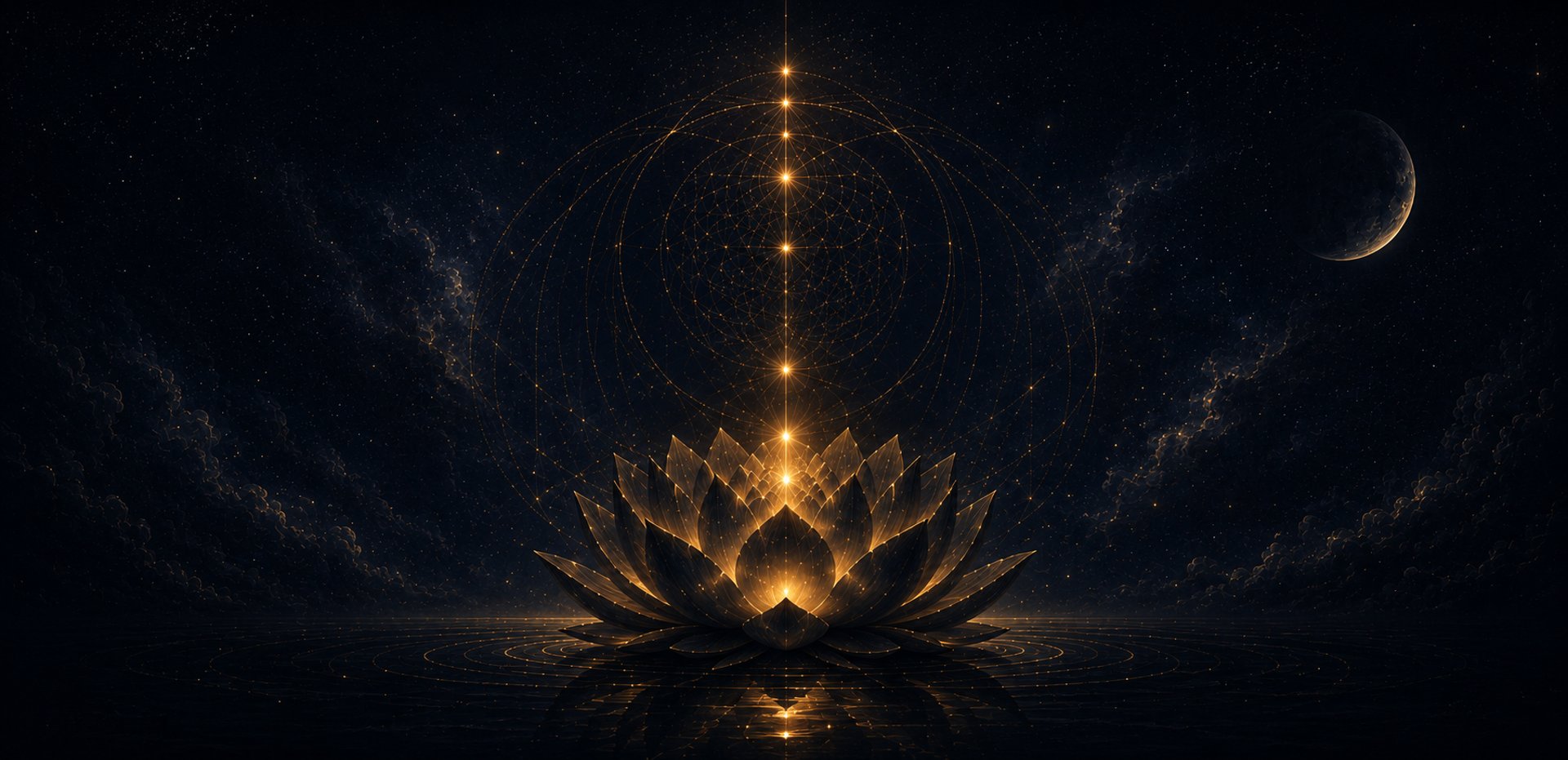
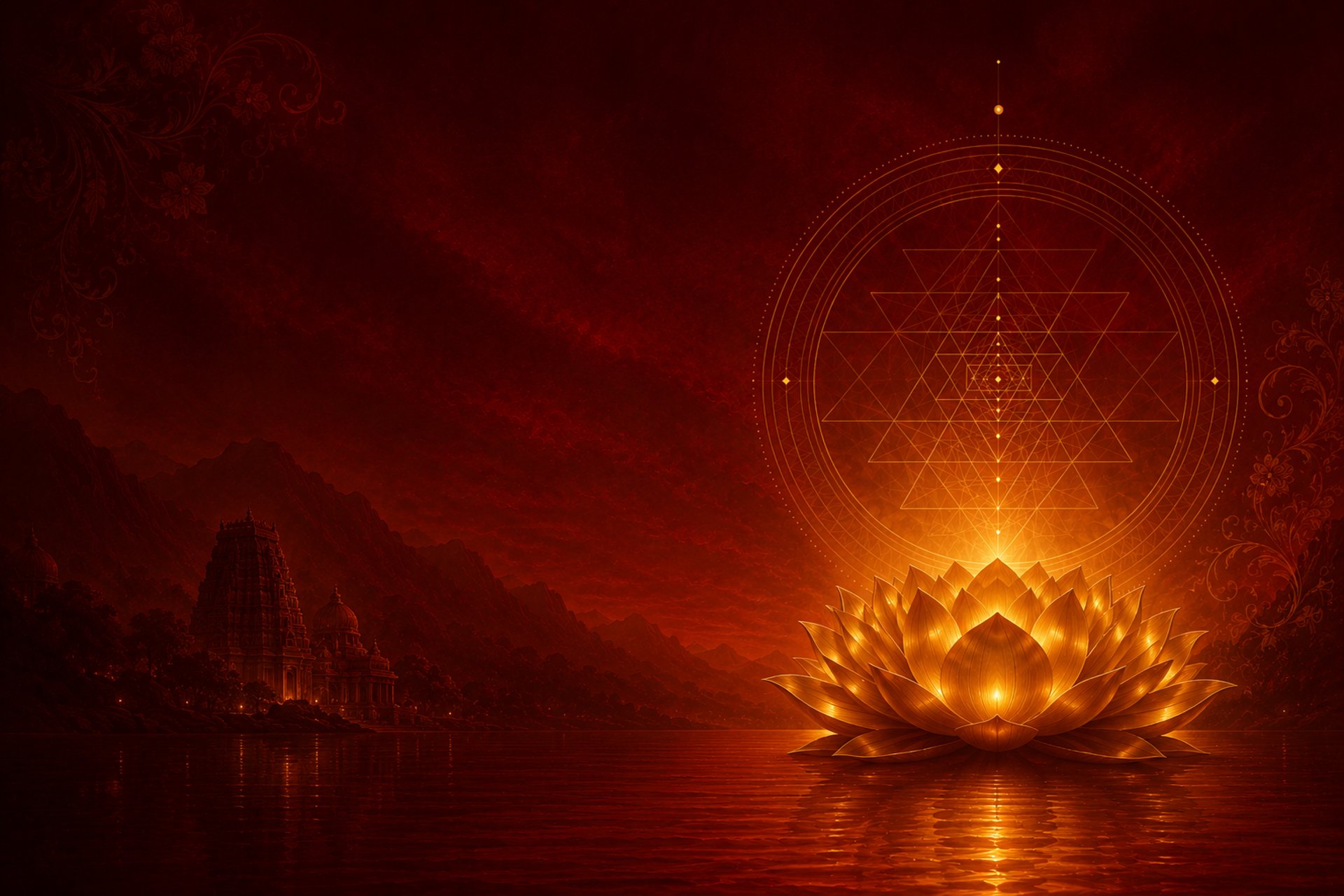
8. The Lotus Analogy
Scriptures often compare detachment to a lotus.
The lotus grows in water.
Yet water does not cling to it.
Similarly, the Mother pervades the universe.
Yet nothing adheres to her.
This is Virāgiṇī.
9. Advaita Vedāntic Meaning
Now the deepest layer.
A profound question
Why is the Absolute detached?
The hidden teaching
Because it is complete.
Attachment Arises from Lack
Attachment says:
"I need this."
"I cannot be complete without that."
Such dependence belongs to the limited ego.
The Absolute Lacks Nothing
Earlier names revealed:
Sadātuṣṭā – Ever content.
Kevalā – The Absolute One.
Anarghya-kaivalya-pada-dāyinī – Giver of liberation.
Since the Mother is complete, she has nothing to gain.
Therefore she is naturally detached.
The Witness of All
Consciousness illumines:
pleasure,
pain,
gain,
loss.
Yet it remains unaffected.
The Mother as pure Consciousness is Virāgiṇī.
Detachment Is Freedom
The Mother's detachment is not coldness.
It is freedom.
Because she is unattached, her compassion is universal and impartial.
She loves all equally.
The Highest Vairāgya
The sage seeks vairāgya through practice.
The Mother possesses it inherently.
Nothing can bind the infinite.
Thus she is Virāgiṇī.
Relation to Earlier Names
Observe the progression:
Viśvamātā – Mother of the universe.
Jagaddhātrī – Sustainer of the universe.
Viśālākṣī – All-seeing Mother.
Virāgiṇī – Yet completely unattached.
The Sahasranāma reveals the mystery of divine love: total care without bondage.
The Non-Dual Meaning
At the highest level, Virāgiṇī signifies the Supreme Consciousness that remains untouched by all phenomena. Though the universe appears within it, Consciousness neither clings to nor depends upon anything, remaining eternally free and complete.
A Deeper Contemplation
The name Virāgiṇī is one of the most profound spiritual teachings in the Sahasranāma.
The Mother is infinitely compassionate.
Yet she is utterly free.
The sequence after Viśālākṣī is especially significant.
The Mother sees all, loves all, and protects all.
Yet she remains unattached.
This is not a contradiction.
It is perfection.
From a devotional perspective, Virāgiṇī is the Mother whose love seeks the liberation of her children rather than their dependence.
From a spiritual perspective, she embodies the ideal of inner freedom.
From a Śākta perspective, she manifests the universe without becoming bound by it.
From an Advaitic perspective, she is the unattached Consciousness that witnesses all experiences while remaining forever unchanged.
She creates.
She sustains.
She loves.
Yet she remains free.
Ultimately, Virāgiṇī teaches that the Divine Mother is completely free from attachment despite being the source and sustainer of all existence. Her detachment is not indifference but the natural freedom of infinite completeness. Through this name, the seeker learns that true love is not possessive, true compassion is not dependent, and true freedom lies in recognizing one's nature as the unattached and ever-complete Consciousness represented by the Divine Mother.
One-line Essence
Virāgiṇī reveals the Divine Mother as the perfectly detached and eternally free reality that loves all without attachment.