766. Japāpuṣpa-nibhākṛtiḥ
Japāpuṣpa-nibhākṛtiḥ reveals the Divine Mother as one whose radiant form resembles the deep red hibiscus flower. The name symbolizes the vibrant power of Śakti, divine beauty, and spiritual awakening, teaching that the formless Absolute compassionately manifests in a glorious crimson form that inspires devotion and leads the seeker toward the realization of pure Consciousness.

Japāpuṣpa-nibhākṛtiḥ (जपापुष्पनिभाकृतिः)
This is the 766th name of the Lalitā Sahasranāma.
After revealing the Divine Mother as Śuddhā, the absolutely pure and stainless reality, the Sahasranāma now returns to a beautiful visual description of her divine form:
Japāpuṣpa-nibhākṛtiḥ: She whose form resembles the red hibiscus flower; She whose complexion shines with the brilliance of the japā flower; She who radiates the crimson splendor of divine energy and consciousness.
This name combines beauty, symbolism, and profound Tantric significance.
1. Literal Meaning
Word-by-word
Japāpuṣpa – the hibiscus flower (especially the deep red hibiscus offered in Śākta worship)
Nibha – resembling, similar to
Ākṛtiḥ – form, appearance, shape
Literal translation
"She whose form resembles the hibiscus flower."
or
"She whose appearance is like a red hibiscus blossom."
2. Traditional Meaning
The commentators explain:
The Goddess is called Japāpuṣpa-nibhākṛtiḥ because her radiant complexion resembles the brilliant crimson hue of the hibiscus flower.
The comparison is not merely aesthetic but deeply symbolic.
3. Why the Hibiscus Flower?
The japā flower (hibiscus) holds special importance in Śākta worship.
Its qualities include:
deep crimson color,
freshness,
vibrancy,
beauty,
vitality.
It is one of the most beloved flowers offered to the Goddess.
Therefore it becomes a natural symbol of her form.
4. The Significance of Red
In Śrīvidyā and Śākta traditions, red is a sacred color.
It symbolizes:
Śakti,
creative power,
life force,
divine love,
spiritual energy,
blissful awareness.
The Mother's crimson form represents the dynamic aspect of the Absolute.
5. Devotional Meaning
For devotees, this name evokes a vivid image:
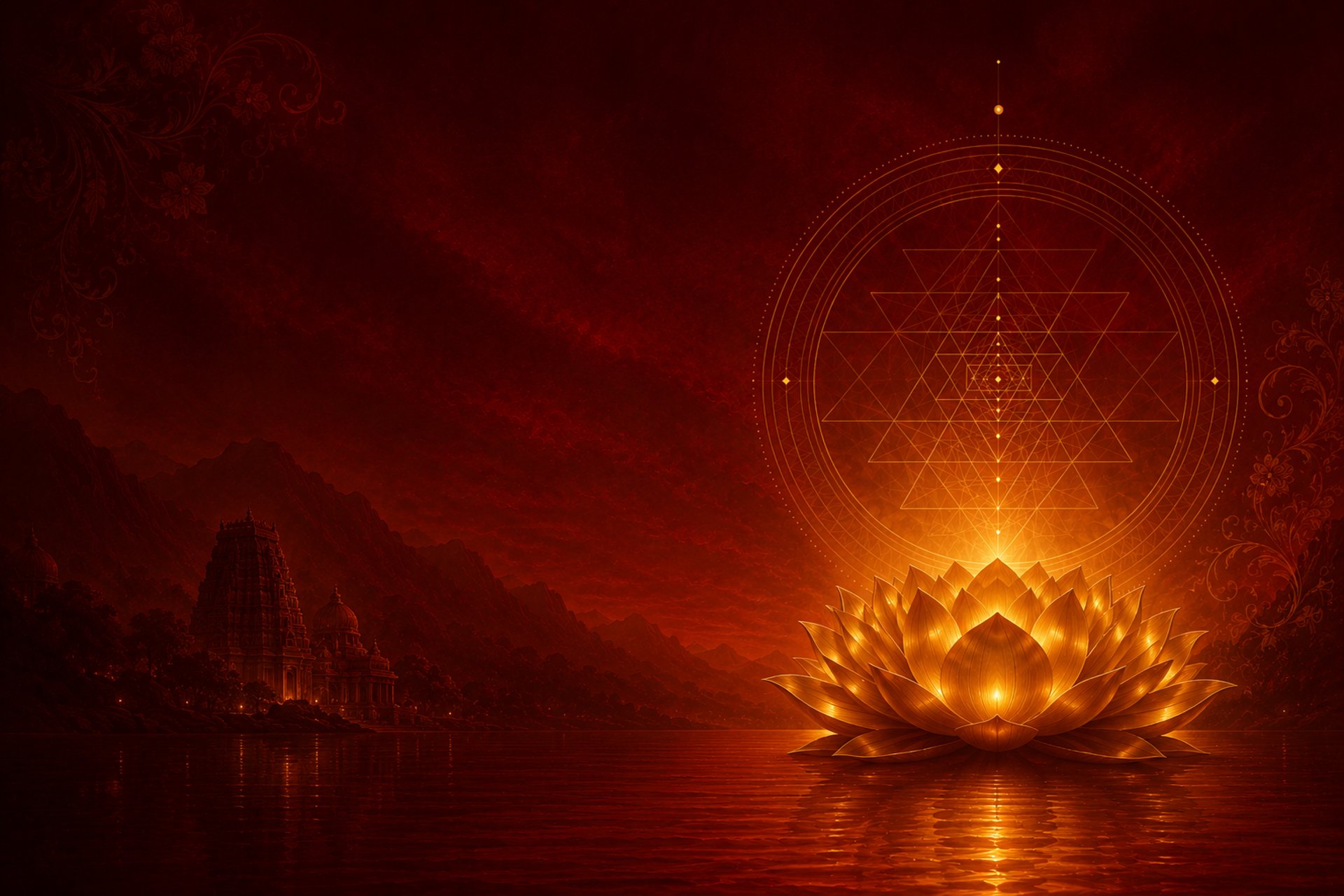
The Divine Mother shines with a soft yet brilliant crimson radiance, like a freshly blossomed hibiscus illuminated by the rising sun.
Meditation on this form fills the heart with devotion and joy.
6. Why Does This Name Follow Śuddhā?
The sequence is beautiful.
Śuddhā
The Mother is revealed as pure Consciousness.
Japāpuṣpa-nibhākṛtiḥ
That pure Consciousness now appears in a form that devotees can lovingly contemplate.
The Sahasranāma moves from the formless purity of the Mother to her radiant divine form.
7. Śākta Meaning
In Śrīvidyā, the crimson complexion of Lalitā Tripurasundarī is profoundly significant.
The red color symbolizes:
Icchā Śakti (power of will),
Jñāna Śakti (power of knowledge),
Kriyā Śakti (power of action),
blended into a single radiant presence.
Thus the hibiscus-red form represents the fullness of Divine Śakti.
8. The Color of Dawn
Many commentators compare the Mother's hue to:
the rising sun,
the dawn sky,
vermilion,
hibiscus petals.
These images symbolize awakening, illumination, and the emergence of spiritual knowledge.
9. Advaita Vedāntic Meaning
Now the deeper layer.
A profound insight
Why does the formless Absolute appear in a beautiful form?
The hidden teaching
Out of compassion for devotees.
Form as a Gateway
The human mind relates naturally to form, color, and beauty.
The Mother assumes forms that can be loved, worshipped, and contemplated.
The Crimson Symbolism
Red represents life and vitality.
Spiritually, it symbolizes Consciousness actively expressing itself as creation.
The crimson form of the Mother is therefore the visible expression of the invisible Absolute.
Beauty as a Revelation
The beauty of the Divine form is not merely ornamental.
It reveals the bliss and fullness of Brahman.
The seeker's attraction to divine beauty ultimately leads beyond form to the formless reality.
From Form to Formlessness
The devotee begins by contemplating the crimson form of the Mother.
Eventually one realizes that the beauty perceived externally is the radiance of Consciousness itself.
Relation to Earlier Names
Observe the progression:
Śuddhā: Absolute purity.
Japāpuṣpa-nibhākṛtiḥ: The pure Divine appearing in a crimson, worshipful form.
The Sahasranāma beautifully balances transcendence and devotion.
The Non-Dual Meaning
At the highest level, Japāpuṣpa-nibhākṛtiḥ signifies the appearance of pure Consciousness as the radiant form of the Divine Mother. Her crimson beauty symbolizes the dynamic power of awareness manifesting as creation while remaining eternally pure and non-dual.
A Deeper Contemplation
The name Japāpuṣpa-nibhākṛtiḥ is one of the most visually evocative names in the Sahasranāma.
After the philosophical grandeur of names like Śuddhā, the text gently returns the mind to devotion.
The Mother is not merely an abstract principle.
She is infinitely beautiful.
The hibiscus flower is an especially fitting symbol.
Its vibrant crimson hue suggests life, energy, and sacred power.
In Śākta worship, it has long been associated with the Goddess because it reflects the radiance of Śakti herself.
The sequence after Śuddhā is particularly meaningful.
The Mother is first revealed as absolute purity beyond all attributes.
Then she appears in a form that the devotee can lovingly meditate upon.
Thus the Sahasranāma unites the paths of devotion and wisdom.
From a devotional perspective, Japāpuṣpa-nibhākṛtiḥ is the crimson-hued Mother whose beauty enchants the hearts of devotees.
From a symbolic perspective, her red complexion represents divine energy, love, and creative power.
From a Śrīvidyā perspective, it signifies the fullness of Śakti expressed through will, knowledge, and action.
From an Advaitic perspective, it is pure Consciousness appearing in a beautiful form for the upliftment of seekers.
The Mother is both the formless Absolute and the radiant crimson Goddess.
Ultimately, Japāpuṣpa-nibhākṛtiḥ teaches that the Divine Mother, though beyond all form and attribute, graciously manifests in a radiant crimson form resembling the hibiscus flower. Her beauty symbolizes the dynamic power of Consciousness and invites the devotee from loving contemplation to the realization of the eternal, non-dual Self.
To contemplate Japāpuṣpa-nibhākṛtiḥ is to behold the Divine Mother as the crimson radiance of pure Consciousness blossoming as beauty, grace, and spiritual awakening.
One-line Essence
Japāpuṣpa-nibhākṛtiḥ reveals the Divine Mother as the crimson-hued embodiment of beauty, power, and pure Consciousness.