663. Ajājetrī
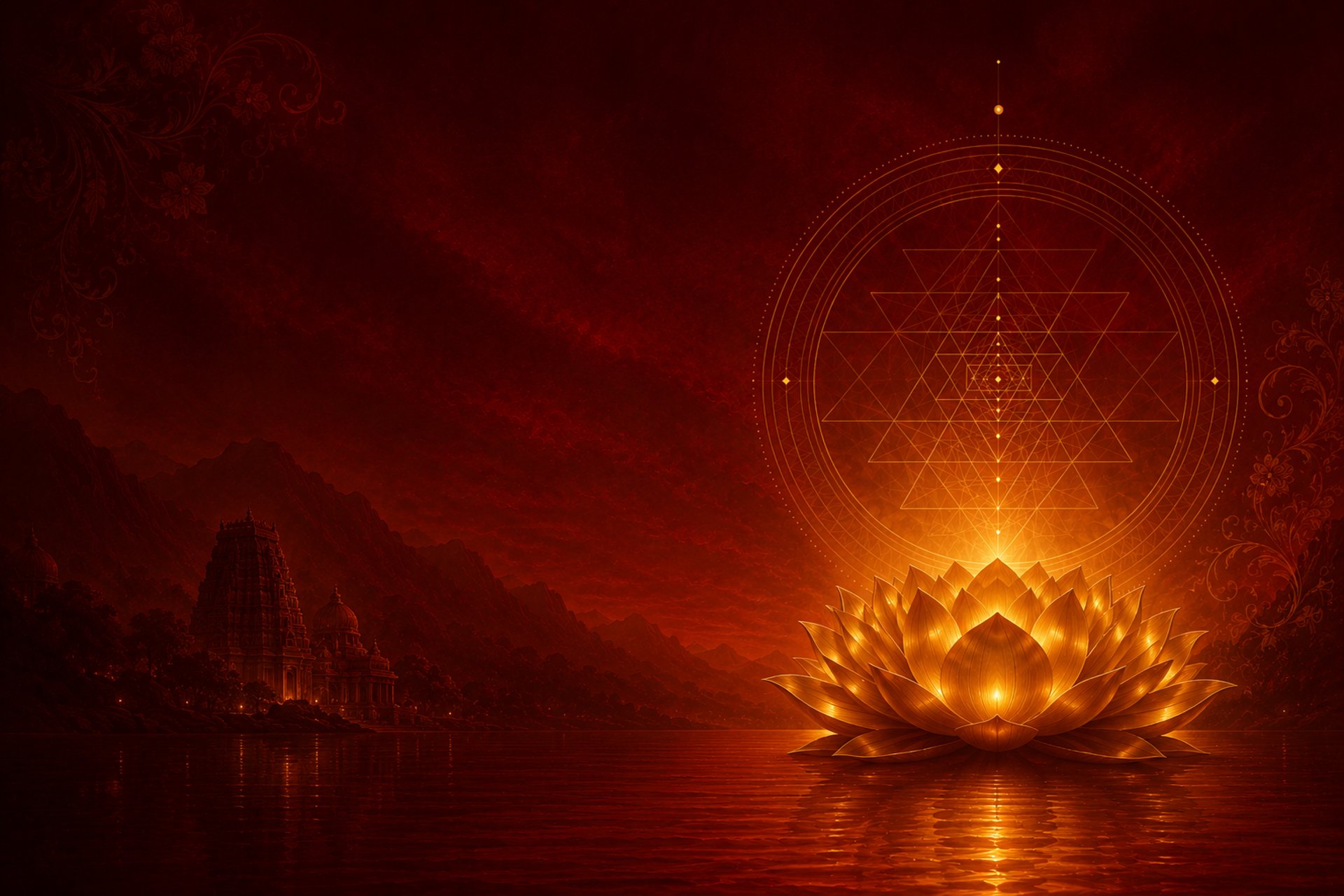
Ajājetrī reveals the Divine Mother as the conqueror of Māyā and the sovereign of primordial nature. The name symbolizes her transcendence over all forms of limitation, teaching that while she manifests the universe through her divine power, she remains forever free, untouched, and supreme, guiding seekers beyond illusion to the realization of the eternal Self.

Ajājetrī (अजाजेत्री)
This is the 663rd name of the Lalitā Sahasranāma.
After revealing the Divine Mother as Aṣṭamūrtiḥ, manifesting as the entire cosmos, the Sahasranāma now proclaims her supremacy over even the power that creates the universe:
Ajājetrī – She who conquers Ajā; She who is victorious over Māyā (Prakṛti); She who transcends and controls the power of cosmic manifestation.
This is a subtle and profoundly philosophical name.
1. Literal Meaning
Word-by-word
Ajā – literally "the unborn one."
In Vedāntic and Tantric commentaries, Ajā often refers to:
Prakṛti (primordial nature),
Māyā (the cosmic power of manifestation),
the unborn causal principle from which the universe emerges.
Jetrī – conqueror, victor, one who overcomes.
Literal translation
"She who conquers Ajā."
or
"She who is victorious over Māyā."
or
"She who transcends primordial nature."
2. Who is Ajā?
In many scriptural contexts, Ajā denotes the primordial, unmanifest nature from which the universe evolves.
It is the causal matrix of creation.
However, the Sahasranāma teaches:
Even this cosmic power is subordinate to the Divine Mother.
She is its source and sovereign.
3. Traditional Meaning
The commentators explain:
The Goddess is called Ajājetrī because she is the ruler of Māyā and Prakṛti and remains ever beyond their limitations.
While beings become bound by Māyā, she governs Māyā.
4. Victory Over Māyā
Ordinary beings experience:
ignorance,
attachment,
duality,
limitation.
These are effects of Māyā.
The Mother stands beyond all such limitations.
Therefore she is Ajājetrī.
5. Devotional Meaning
For devotees, this name is a source of hope.
The Mother who transcends Māyā can also free her devotees from Māyā.
She is not merely beyond bondage.
She is the liberator from bondage.
6. Why Does This Name Follow Aṣṭamūrtiḥ?
The sequence is profound.
Aṣṭamūrtiḥ
The Mother appears as the entire universe.
Ajājetrī
Yet she is not limited by the universe.
She transcends the very power that produces manifestation.
Thus the Sahasranāma balances:
immanence,
transcendence.
7. The Mother and Māyā
The Mother employs Māyā as a creative power.
But she is never controlled by it.
Just as an artist is not trapped within a painting,
the Mother is not confined within creation.
8. Śākta Meaning
In Śākta philosophy:
Māyā itself is one aspect of Śakti.
Yet Lalitā is the Supreme Śakti beyond all limited manifestations.
Thus she is the sovereign of Māyā rather than its subject.
9. Advaita Vedāntic Meaning
Now the deeper layer.
A profound insight
What is the fundamental bondage of the individual?
The hidden teaching
Mistaking the unreal for the real.
Māyā and Superimposition
The world appears as separate from the Self.
This appearance is Māyā.
The Mother as Ajājetrī stands beyond this illusion.
The Rope and Snake
A rope may be mistaken for a snake.
The illusion depends on the rope.
The rope is unaffected by the illusion.
Similarly, Consciousness remains untouched by Māyā.
The Mother is that Consciousness.
The Controller of Appearance
The universe appears through Māyā.
Yet the reality behind the appearance remains unchanged.
The Mother is the reality behind the appearance.
Thus she "conquers" Māyā simply by transcending it.
The Freedom of the Absolute
Māyā binds only those who identify with limitation.
The Mother is infinite.
Nothing can bind her.
The Liberating Power
The same Mother who manifests the world through Māyā also grants the knowledge that dissolves its binding effect.
Thus Ajājetrī is closely related to:
Jñānadā,
Jñāna-vigrahā,
Sarva-vedānta-saṃvedyā.
Relation to Earlier Names
Observe the progression:
Aṣṭamūrtiḥ – She appears as the universe.
Ajājetrī – She transcends and governs the power that produces the universe.
The Sahasranāma prevents the seeker from confusing manifestation with ultimate reality.
The Non-Dual Meaning
At the highest level, Ajājetrī signifies pure Consciousness that remains forever free from Māyā, Prakṛti, and all limiting conditions. The Divine Mother is the transcendent reality in whose presence the universe appears, yet which remains untouched by appearance.
A Deeper Contemplation
The name Ajājetrī reveals a subtle balance at the heart of the Sahasranāma.
The Mother has repeatedly been described as:
the universe,
the elements,
the powers of creation,
the support of all existence.
One might therefore conclude that she is identical with the manifest cosmos alone.
This name corrects that misunderstanding.
The Mother is present in creation, but she is not confined by creation.
She governs the very power through which creation appears.
The sequence after Aṣṭamūrtiḥ is therefore highly significant.
The Mother first appears as all forms.
Then she is revealed as transcending the principle that generates those forms.
Immanence is balanced by transcendence.
From a devotional perspective, Ajājetrī inspires faith that the Mother can free devotees from ignorance and limitation.
From a philosophical perspective, it teaches the supremacy of Consciousness over matter and appearance.
From an Advaitic perspective, it points to Brahman as eternally untouched by Māyā.
The Mother is that Brahman.
Ultimately, Ajājetrī teaches that the Divine Mother is victorious over Māyā and Prakṛti, remaining forever free from the limitations of cosmic manifestation. She is the sovereign of creation, the transcendent reality beyond appearance, and the liberating power that leads seekers beyond illusion into truth.
To contemplate Ajājetrī is to recognize the Divine Mother as the unconquered and unconquerable reality beyond all limitation, the ruler of Māyā, and the source of liberation from the bondage of ignorance.
One-line Essence
Ajājetrī reveals the Divine Mother as the victorious ruler of Māyā, eternally free from all limitation and illusion.