609. Daharākāśa-rūpiṇī
Daharākāśa-rūpiṇī reveals the Divine Mother as the subtle and infinite space within the spiritual heart, celebrated in the Upaniṣadic Dahara Vidyā. The name symbolizes pure consciousness, the innermost reality of the Self, and the mysterious truth that the boundless universe resides within the heart of awareness, which is the Divine Mother herself.

Daharākāśa-rūpiṇī (दहराकाशरूपिणी)
This is the 609th name of the Lalitā Sahasranāma.
After revealing the Divine Mother as Daṇḍa-nīti-sthā, the upholder of cosmic order and dharma, the Sahasranāma suddenly turns inward once again and enters one of the most profound teachings of the Upaniṣads:
Daharākāśa-rūpiṇī – She whose form is the inner space of the heart; She who is the subtle space within the spiritual heart.
This is one of the most philosophically significant names in the Sahasranāma and directly echoes the celebrated Dahara Vidyā of the Upaniṣads.
1. Literal Meaning
Word-by-word
Dahara – small, subtle, minute
Ākāśa – space, ether, vast expanse
Rūpiṇī – she whose form is; she who manifests as
Literal translation
"She whose form is the subtle inner space."
or
"She who is the space within the heart."
or
"She who manifests as the daharākāśa, the inner spiritual space."
2. What is Daharākāśa?
The term comes from the Chāndogya Upaniṣad, where we find the famous teaching:
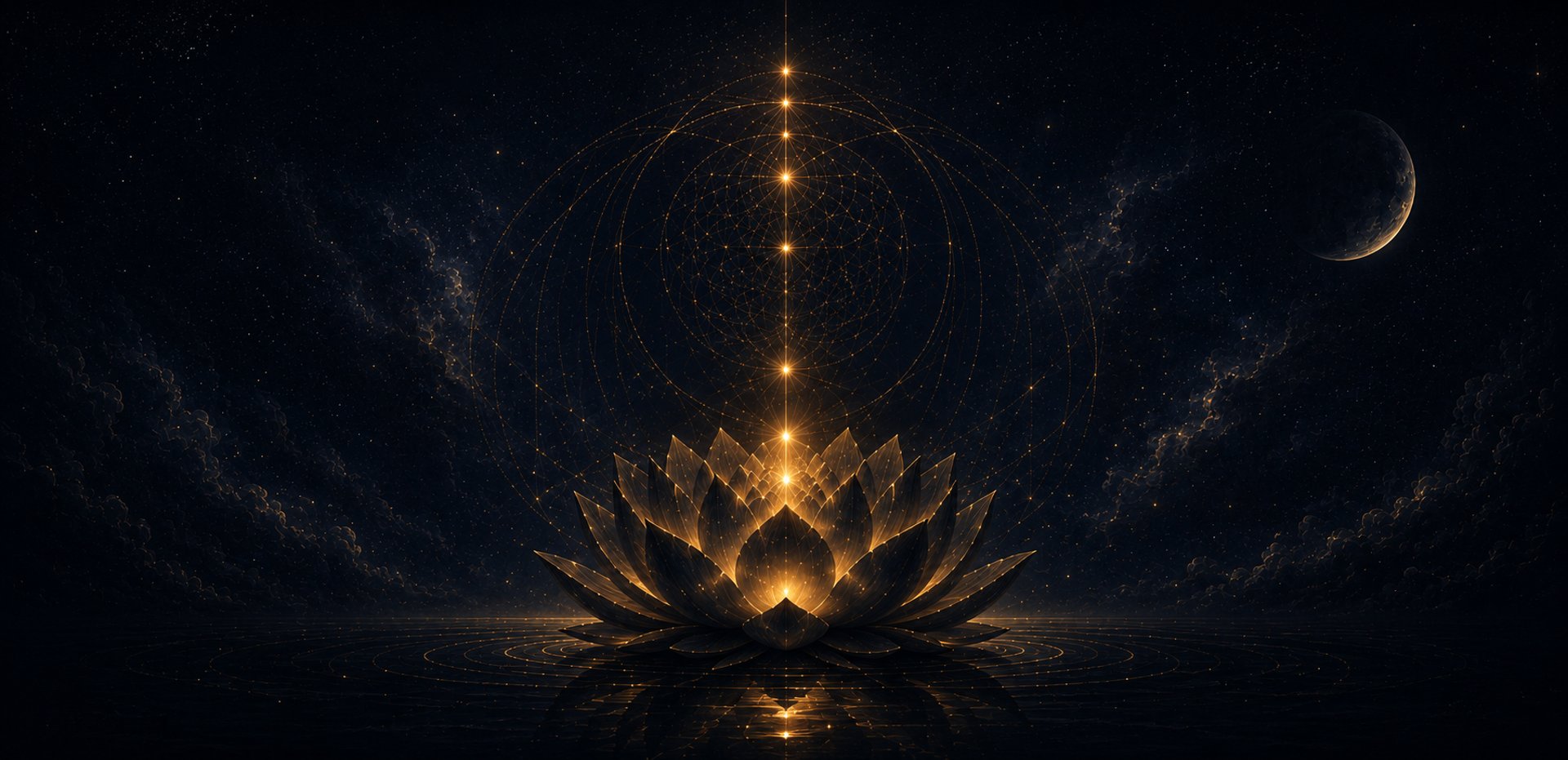
"Within the city of Brahman (the body) is a small lotus-like abode, and within it is a small space (dahara ākāśa)."
This "small space" is not physical.
It refers to:
the spiritual heart,
the innermost consciousness,
the abode of Brahman.
3. The Upaniṣadic Mystery
The Upaniṣad asks:
How can something small contain the entire universe?
The answer is:
Because the "small space" is not limited by physical dimensions.
Within that inner space exist:
all worlds,
all beings,
all possibilities,
the Supreme Reality itself.
The Divine Mother is that inner infinite space.
4. Traditional Meaning
The commentators explain that the Goddess is called Daharākāśa-rūpiṇī because she is the very reality referred to in the Dahara Vidyā.
She abides as the subtle, limitless consciousness within the heart-lotus of every being.
5. Why Is It Called "Small"?
The word dahara (small) is symbolic.
The heart appears small.
The space within it appears tiny.
Yet the reality present there is infinite.
Just as the sky reflected in a small pool is not actually limited by the pool, the infinite Consciousness appears within the heart without becoming limited.
6. Devotional Meaning
For a devotee, this name conveys an intimate truth:
The Mother is not merely in temples, sacred mountains, or heavenly realms.
She resides in the innermost sanctuary of the heart.
The seeker's own heart becomes her temple.
7. Why Does This Name Follow Daṇḍa-nīti-sthā?
The sequence is profound.
Daṇḍa-nīti-sthā
The Mother governs the entire universe.
Daharākāśa-rūpiṇī
The same cosmic ruler is discovered within the smallest inner space of the heart.
The infinite and the intimate are revealed as one.
8. Śrīvidyā Meaning
In Śrīvidyā, the heart is not merely an emotional center.
It is the seat of the highest realization.
The Daharākāśa is the inner shrine where the Goddess is directly experienced as pure awareness.
Thus this name points toward inward meditation and realization.
9. Advaita Vedāntic Meaning
Now the deeper layer.
A profound insight
How can the infinite exist within the finite?
The hidden teaching
It never becomes confined.
Only the appearance of limitation arises.
Space as a Symbol
Ākāśa (space) is often used in Vedānta because:
it accommodates everything,
it remains untouched by what appears within it,
it has no intrinsic boundaries.
The Mother's nature resembles space.
The Heart-Space
The Daharākāśa is not a physical cavity.
It is the space of awareness in which:
thoughts arise,
emotions appear,
perceptions occur.
The Mother is that awareness itself.
Infinite Within the Finite
The body appears finite.
Yet awareness has no measurable size.
The heart-space is therefore "small" only from the standpoint of appearance.
In reality it is limitless.
The Cave of the Heart
Earlier the Sahasranāma referred to:
Hṛdayasthā (She who resides in the heart)
Guha-janma-bhūḥ (Source of the hidden wisdom of the heart-cave)
Now it reveals the very nature of that heart:
It is the infinite space of Consciousness.
Beyond Inner and Outer
Once the Daharākāśa is understood, the distinction between inner and outer begins to dissolve.
The same consciousness appearing as the inner self is also the ground of the entire universe.
Relation to Earlier Names
Observe the progression:
Hṛdayasthā – She resides in the heart.
Guha-janma-bhūḥ – Source of the hidden wisdom within the heart-cave.
Daṇḍa-nīti-sthā – Ruler of the cosmic order.
Daharākāśa-rūpiṇī – The infinite inner space in which both the individual and cosmos appear.
The Sahasranāma unites the microcosm and macrocosm.
The Non-Dual Meaning
At the highest level, Daharākāśa-rūpiṇī signifies pure Consciousness itself.
It appears as the subtle space within the heart, yet it is limitless and all-pervading.
The Mother is not merely present in that space.
She is that space of awareness in which all existence appears.
A Deeper Contemplation
The name Daharākāśa-rūpiṇī stands among the most profound Upaniṣadic names of the Lalitā Sahasranāma.
It points directly toward the mystery of the heart, not as a physical organ but as the center of spiritual realization.
The Upaniṣads speak of a tiny space within the heart-lotus and then declare that the entire universe exists within it.
This apparent paradox is resolved when the space is understood as consciousness rather than physical extension.
Awareness seems intimate and personal, yet it is not truly confined.
Every experience of the world occurs within it.
The Divine Mother is called Daharākāśa-rūpiṇī because she is this infinite awareness.
The name beautifully reconciles transcendence and immanence.
The Mother who governs the cosmos as Deveśī and Daṇḍa-nīti-sthā is the very same reality discovered within the heart.
One need not travel anywhere to find her.
The vastness of the universe and the depth of the heart converge in the same truth.
From an Advaitic perspective, the Daharākāśa is the Self.
It is the boundless awareness that remains untouched by all experiences while simultaneously allowing them to appear.
The Mother is that limitless reality.
Ultimately, Daharākāśa-rūpiṇī teaches that the Divine Mother is the infinite space of consciousness within the spiritual heart. Though appearing as the subtle inner reality of the individual, she is in truth the boundless awareness that contains and illumines the entire universe.
To contemplate Daharākāśa-rūpiṇī is to recognize the Divine Mother as the infinite heart-space of pure consciousness, where the individual and the cosmos meet, and where the seeker discovers the eternal truth of the Self.
One-line Essence
Daharākāśa-rūpiṇī reveals the Divine Mother as the infinite space of consciousness within the heart, containing and illumining all existence.