597. Trikoṇāntara-dīpikā
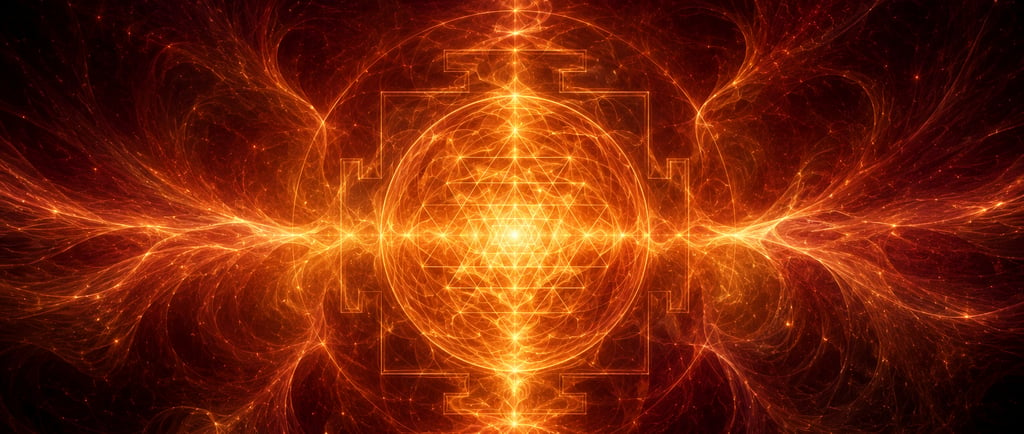
Trikoṇāntara-dīpikā reveals the Divine Mother as the radiant lamp shining within the sacred triangle, symbolizing the self-luminous consciousness at the heart of creation and spiritual realization. The name teaches that the Goddess is the inner light illuminating the universe, the Śrīcakra, and the seeker's own heart, revealing the eternal reality underlying all existence.

Trikoṇāntara-dīpikā (त्रिकोणान्तरदीपिका)
This is the 597th name of the Lalitā Sahasranāma.
After revealing the Divine Mother as Ravi-prakhyā, the radiant sun of consciousness shining within the heart, the Sahasranāma now presents one of the most profound and esoteric names in the entire Śrīvidyā tradition:
Trikoṇāntara-dīpikā – She who is the lamp shining within the triangle; She who illumines the innermost sacred triangle.
This name is rich with Tantric symbolism and points directly to the deepest mysteries of the Śrīcakra and the spiritual heart.
1. Literal Meaning
Word-by-word
Trikoṇa – triangle
Antara – within, inside, interior
Dīpikā – lamp, light, illuminator
Literal translation
"She who is the lamp within the triangle."
or
"She who shines in the interior of the sacred triangle."
or
"The illuminating light at the heart of the triangle."
2. What Is the Triangle?
In Śrīvidyā, the downward-pointing triangle (trikoṇa) is one of the most sacred symbols.
It represents:
Śakti,
creation,
the womb of the universe,
divine manifestation,
the union of the three fundamental powers:
Icchā Śakti (Will)
Jñāna Śakti (Knowledge)
Kriyā Śakti (Action)
At the center of this triangle resides the Divine Mother.
3. Traditional Meaning
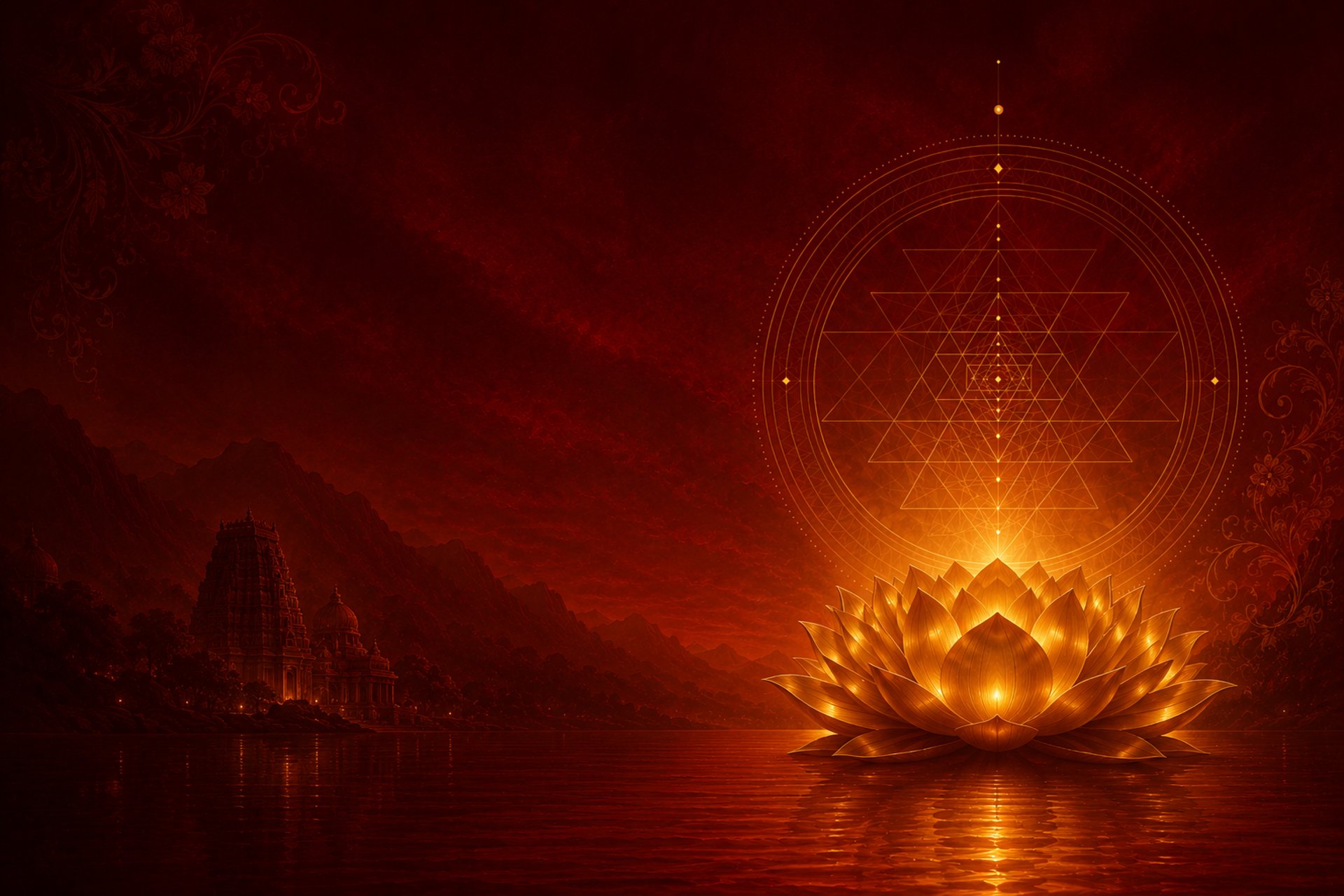
The commentators explain that the Goddess shines within the innermost triangle of the Śrīcakra.
This triangle surrounds the Bindu, the supreme point from which the entire universe emerges.
The Mother is the light illuminating this most sacred center.
4. The Lamp Symbol
A lamp is not merely a source of light.
In spiritual symbolism it represents:
wisdom,
consciousness,
revelation,
self-luminosity.
The Mother is called Dīpikā because she illumines everything while needing no external source of illumination herself.
5. Devotional Meaning
For a devotee, Trikoṇāntara-dīpikā means:
The Mother shines in the innermost sanctuary of the heart.
Just as a lamp illuminates a temple sanctum, she illumines the seeker's inner world.
6. Why Does This Name Follow Ravi-prakhyā?
The sequence is extraordinarily beautiful.
Ravi-prakhyā
The Mother shines like the Sun.
Trikoṇāntara-dīpikā
That immense cosmic radiance is now discovered as a subtle lamp within the sacred triangle.
The infinite becomes intimate.
The cosmic Sun is revealed as the inner flame of realization.
7. Śrīcakra Significance
In the Śrīcakra, the innermost triangle is among the holiest regions.
It symbolizes:
the womb of creation,
the union of Śiva and Śakti,
the source of manifestation.
The Mother shines there as the living light of consciousness.
8. Yogic Interpretation
Many commentators also interpret the triangle as the subtle spiritual center within the heart.
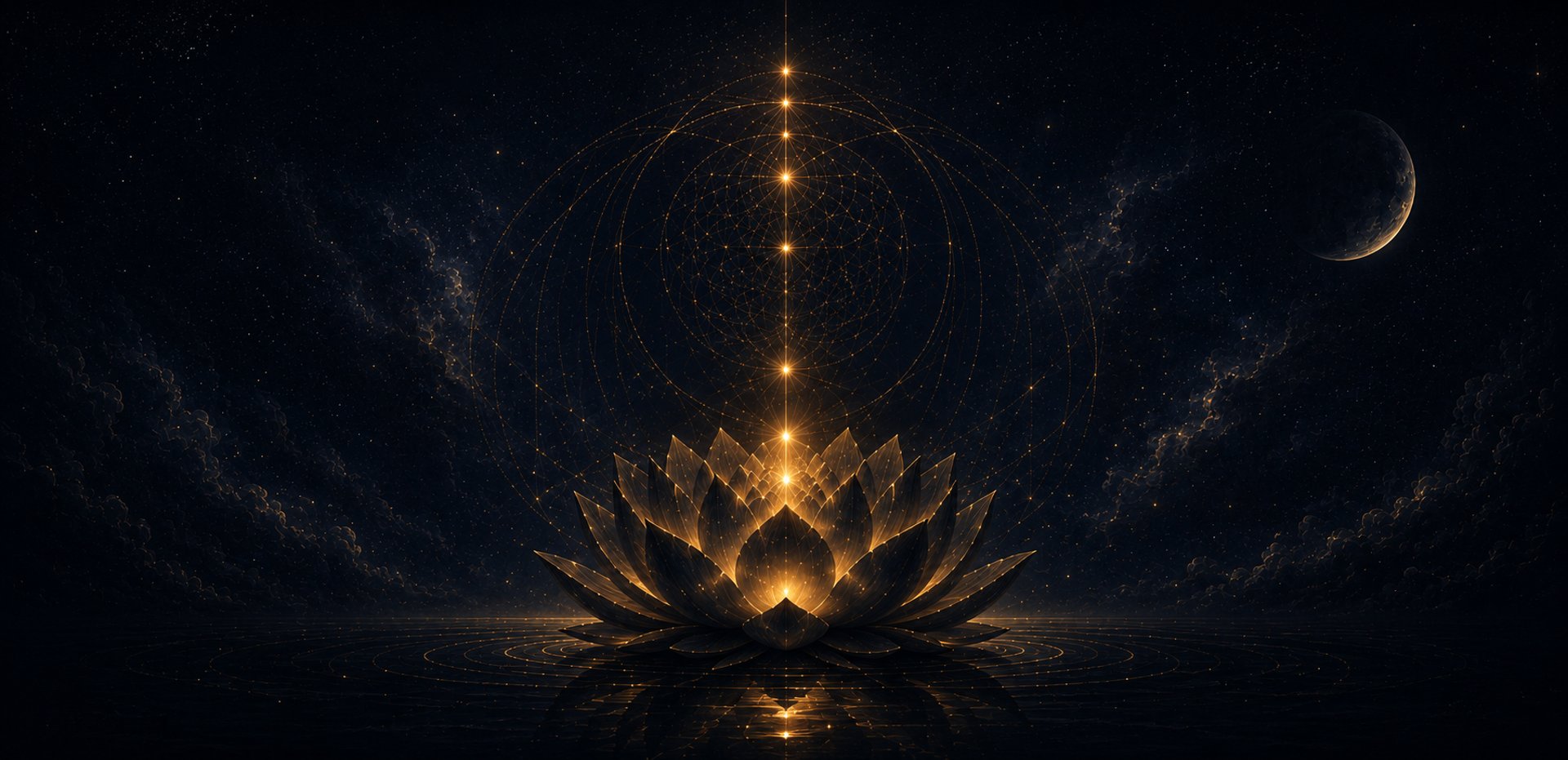
The Mother as Trikoṇāntara-dīpikā is the light shining within the heart-lotus, guiding the seeker toward realization.
9. Advaita Vedāntic Meaning
Now the deeper layer.
A profound insight
Why a lamp inside a triangle?
The hidden teaching
The triangle symbolizes manifestation.
The lamp symbolizes Consciousness.
Consciousness Within Creation
The universe appears as countless forms and activities.
Yet at its center shines awareness.
Without awareness, nothing can be experienced.
The Mother is that awareness.
The Three Powers
The triangle may represent:
Will,
Knowledge,
Action.
These are the powers through which the universe operates.
The lamp within them is Consciousness itself.
Without Consciousness, none of these powers could function.
The Inner Sanctum
Every temple has an inner sanctum.
The heart of existence also has an inner sanctum.
The Mother is the lamp shining there.
Self-Luminous Reality
A lamp illuminates other things.
The Mother as Consciousness illumines:
thoughts,
emotions,
perceptions,
experiences.
Yet she herself requires no illumination.
She is self-revealing.
The Bindu and the Light
The triangle encloses the Bindu.
The Bindu symbolizes the unmanifest source.
The lamp signifies the awareness through which that source is known.
Relation to Earlier Names
Observe the progression:
Hṛdayasthā – The Mother resides in the heart.
Ravi-prakhyā – She shines like the Sun.
Trikoṇāntara-dīpikā – She is the lamp illuminating the innermost sacred center.
The Sahasranāma moves from location to radiance to essence.
The Non-Dual Meaning
At the highest level, Trikoṇāntara-dīpikā signifies the self-luminous Consciousness shining at the heart of all existence.
The triangle represents the manifested universe.
The lamp represents the awareness that illumines it.
The Mother is that awareness.
A Deeper Contemplation
The name Trikoṇāntara-dīpikā is among the most beautiful syntheses of symbolism and philosophy in the Lalitā Sahasranāma.
The image is simple yet profound:
A lamp shining within a sacred triangle.
The triangle represents manifestation, power, and creation.
The lamp represents illumination and consciousness.
Together they describe the relationship between the universe and its underlying reality.
The universe is not self-sustaining.
Its existence becomes meaningful only because it is illumined by awareness.
The Mother is that awareness.
For practitioners of Śrīvidyā, the name points directly to the innermost triangle of the Śrīcakra, where the Divine Mother resides in supreme majesty.
For meditators, it points inward to the heart, where the light of consciousness silently shines.
For philosophers, it reveals the relationship between manifestation and the Absolute.
The world appears as many forms and powers, yet at its center there is only one light.
From an Advaitic perspective, the lamp is the Self.
Thoughts, perceptions, and experiences come and go like objects illuminated by a flame.
The flame itself remains unchanged.
The Mother is that eternal flame of awareness.
Ultimately, Trikoṇāntara-dīpikā teaches that the Divine Mother is the self-luminous light shining within the sacred triangle of creation, the inner lamp of consciousness illuminating both the universe and the heart of the seeker.
To contemplate Trikoṇāntara-dīpikā is to recognize the Divine Mother as the eternal flame of awareness, shining at the innermost center of existence and revealing the unity behind all manifestation.
One-line Essence
Trikoṇāntara-dīpikā reveals the Divine Mother as the self-luminous lamp of consciousness shining within the sacred triangle of creation and the heart.