57. Cintāmaṇi-gṛhānta-sthā
Cintāmaṇi-gṛhānta-sthā reveals the Divine Mother dwelling in the innermost chamber of consciousness, symbolized by the wish-fulfilling jewel palace. The name teaches that true fulfillment is found not in external attainments but in the discovery of the Self, the inexhaustible source of bliss and completeness.

Cintāmaṇi-gṛhānta-sthā (चिन्तामणिगृहान्तस्था)
This is the 57th name of the Lalitā Sahasranāma.
Having revealed the Divine Mother as the sovereign of Śrīmannagara, the Sahasranāma now leads us deeper into the sacred city, to the innermost palace where She resides.
1. Literal Meaning
Word-by-word
Cintāmaṇi – the wish-fulfilling gem; the jewel that grants all desires
Gṛha – house, palace, abode
Anta – interior, innermost part
Sthā – abiding, dwelling, established
Literal translation
"She who dwells in the interior of the Cintāmaṇi palace."
or
"She who abides within the innermost sanctum of the wish-fulfilling jewel palace."
2. Traditional Meaning
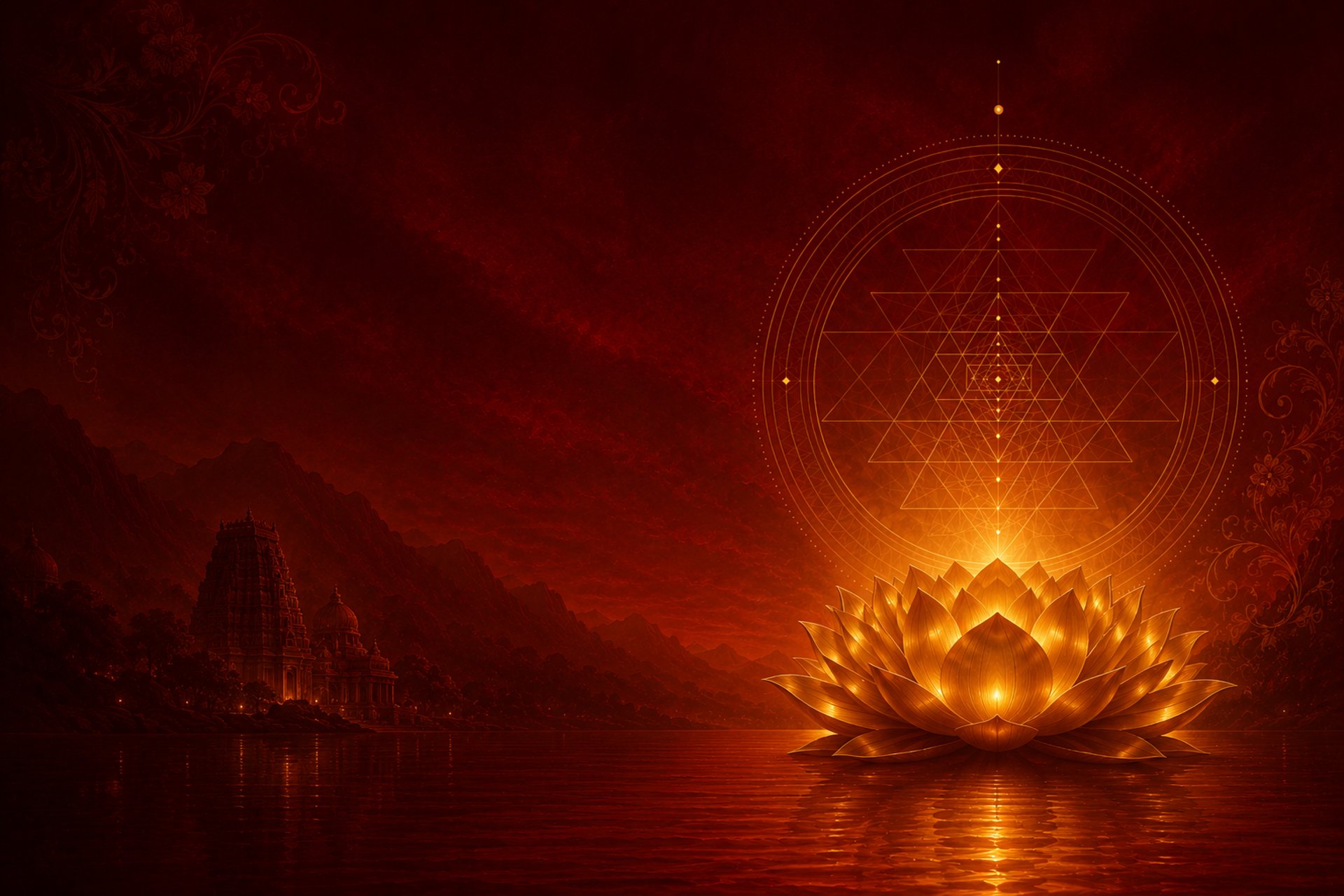
According to the Śrīvidyā tradition, within Śrīmannagara stands the magnificent Cintāmaṇi Gṛha, a palace fashioned from celestial wish-fulfilling gems.
This is the most sacred region of the Divine Mother's abode.
It is here that Lalitā Tripurasundarī resides in supreme majesty, surrounded by infinite radiance, bliss, and wisdom.
3. Devotional Meaning
For a devotee, the Cintāmaṇi palace symbolizes:
the fulfillment of all noble aspirations,
the attainment of divine grace,
the realization of spiritual completeness.
The name teaches:
The ultimate treasure sought by the soul is the Divine Presence itself.
When that Presence is attained, nothing remains lacking.
4. Śrīvidyā Meaning
In Śrīvidyā, the symbolism becomes increasingly inward.
Śrīmannagara
The field of divine consciousness.
Cintāmaṇi Gṛha
The innermost sanctum of that consciousness.
The wish-fulfilling jewel represents a state where all desires are transcended through the realization of their source.
The Divine Mother dwells not in the outermost layers of experience, but in the deepest center of awareness.
5. Advaita Vedāntic Meaning
Now the deeper layer.
What is the Cintāmaṇi?
Ordinarily, a wish-fulfilling gem grants desired objects.
Advaita asks:
What is the fulfillment behind all desires?
Every desire ultimately seeks:
happiness,
completeness,
peace,
freedom.
These are not created by objects.
They arise from the Self.
Thus the true Cintāmaṇi is:
Self-knowledge.
What is the palace?
The palace symbolizes the innermost chamber of consciousness.
As attention moves inward:
thoughts are transcended,
emotions are transcended,
identities are transcended.
At the deepest center remains pure Awareness.
This is the true Cintāmaṇi Gṛha.
Why does the Divine dwell there?
Because the Self is never found in external objects.
The ultimate Reality is not located in the world of appearances.
It is the innermost essence of the one who seeks.
Thus the name teaches:
The Divine abides in the very heart of awareness.
The hidden teaching
The progression is deliberate:
Śrīmannagara-nāyikā
She rules the sacred city.
Cintāmaṇi-gṛhānta-sthā
She dwells in its innermost chamber.
The journey is moving from the cosmic to the intimate.
From the universe to the heart.
From the outer temple to the innermost sanctum.
One-line Essence
Cintāmaṇi-gṛhānta-sthā reveals the Divine as abiding in the innermost sanctuary of consciousness, where all seeking culminates in the realization of the Self as the source of fulfillment, peace, and infinite completeness.