105. Sahasrārāmbujārūḍhā
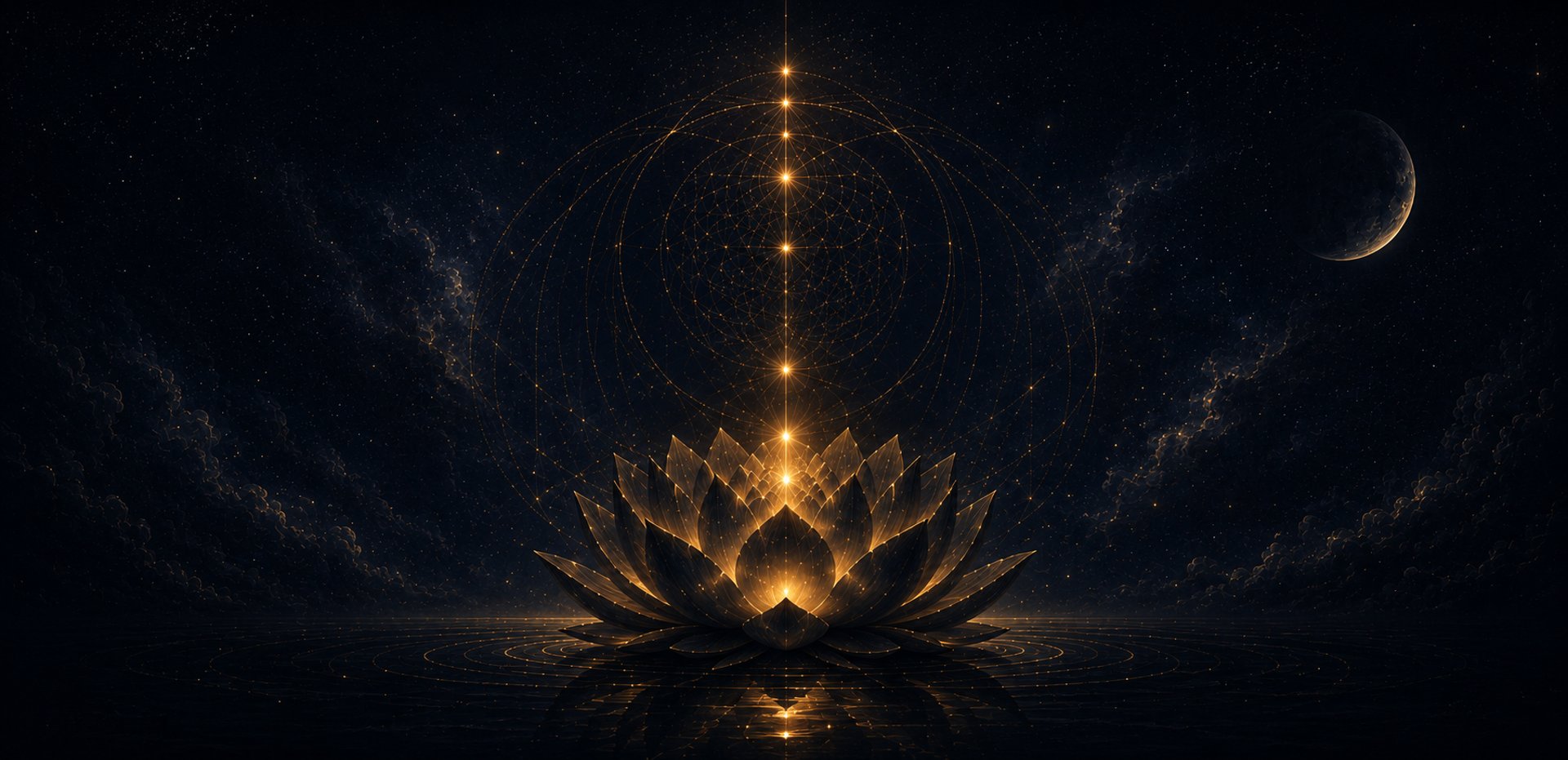
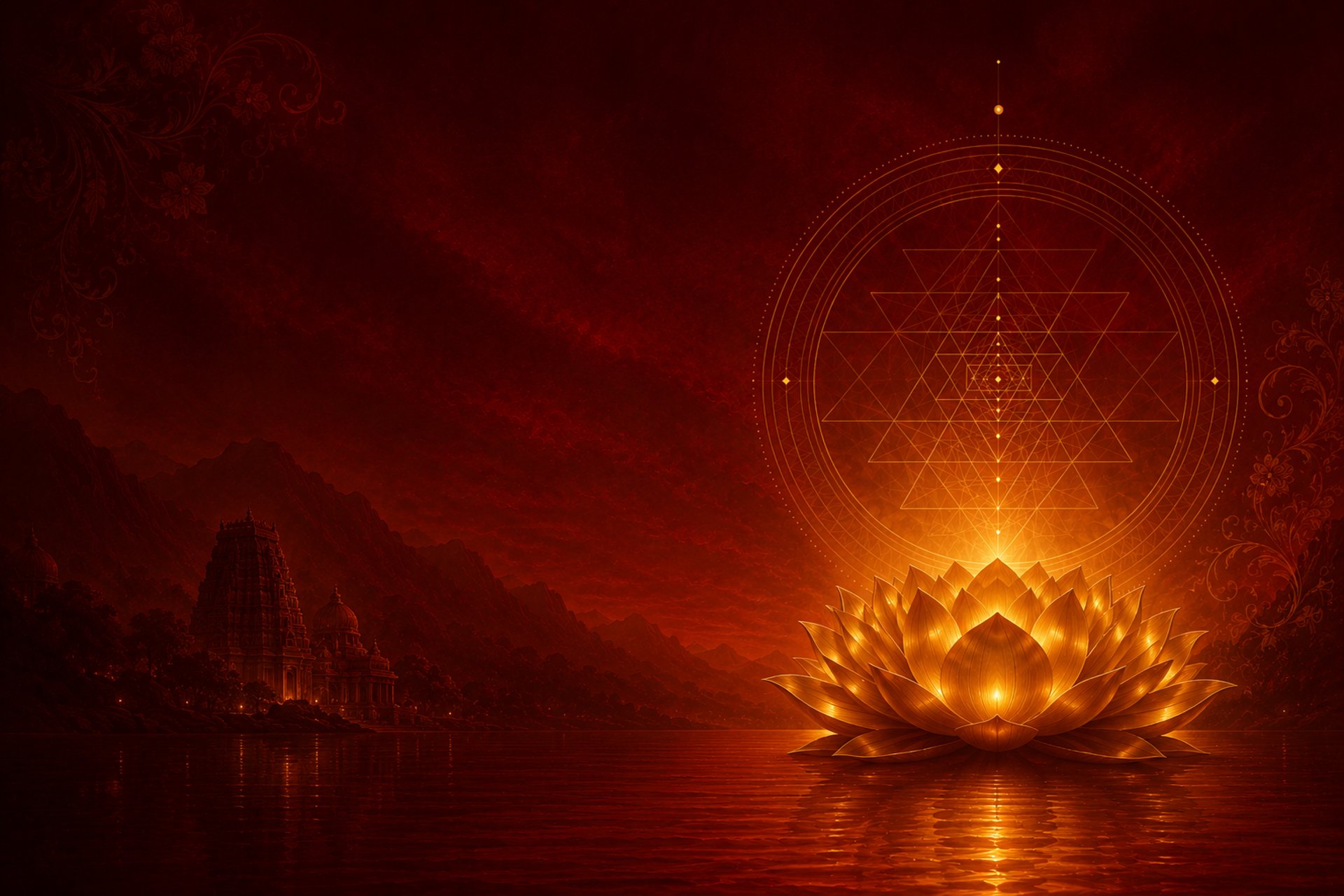
Sahasrārāmbujārūḍhā reveals the Divine Mother established upon the thousand-petalled lotus of supreme realization. The name teaches that spiritual awakening culminates in the recognition of the infinite fullness of Consciousness, where all sense of separation dissolves into the boundless wholeness that has always been present.

Sahasrārāmbujārūḍhā (सहस्राराम्बुजारूढा)
This is the 105th name of the Lalitā Sahasranāma.
Having pierced the Rudra Granthi, the final knot of separateness, the Divine Mother's ascent reaches its sublime culmination.
She is now revealed as:
Sahasrārāmbujārūḍhā - She who has ascended and become established upon the thousand-petalled lotus.
The journey of Kuṇḍalinī that began in the Mūlādhāra now reaches its supreme fulfillment in the Sahasrāra.
1. Literal Meaning
Word-by-word
Sahasrāra – the thousand-petalled lotus at the crown of the head
Ambuja – lotus
Ārūḍhā – ascended, mounted upon, established upon
Literal translation
"She who has ascended to the thousand-petalled lotus."
or
"She who is established upon the Sahasrāra lotus."
2. Traditional Meaning
In the Yogic and Tantric traditions, the Sahasrāra is the highest spiritual center.
It is described as:
a thousand-petalled lotus,
the seat of supreme realization,
the point of union of Śiva and Śakti,
the culmination of the Kuṇḍalinī ascent.
The Divine Mother, having risen through all the chakras and pierced all three granthis, is now established in the Sahasrāra.
3. Devotional Meaning
For a devotee, this name signifies:
The soul's complete union with the Divine.
All separation dissolves.
All seeking finds fulfillment.
The Mother who appeared as the guide, the path, and the indwelling presence is now recognized as the supreme Reality itself.
4. Śrīvidyā Meaning
In Śrīvidyā, the ascent of Kuṇḍalinī is ultimately the journey of recognition.
The Sahasrāra symbolizes:
supreme awareness,
perfect unity,
transcendence of all limitation.
The ascent of Śakti to the Sahasrāra signifies the reunion of:
Śakti and Śiva,
manifestation and transcendence,
the individual and the Absolute.
5. Advaita Vedāntic Meaning
Now the deeper layer.
What is the Sahasrāra?
The thousand petals symbolize infinity.
Not a literal number,
but boundless possibility and completeness.
The Sahasrāra represents:
the limitless fullness of Consciousness.
Why a lotus?
The lotus is one of the most profound spiritual symbols.
It unfolds naturally when conditions are right.
Likewise, realization is not something created.
It is the blossoming of what has always been present.
The lotus symbolizes:
the revelation of innate perfection.
What does it mean that She has ascended?
From the highest standpoint, Consciousness does not travel.
The Divine Mother was never absent from any chakra.
The ascent symbolizes:
the progressive removal of ignorance.
When all veils fall away, the ever-present Reality stands revealed as it always was.
The hidden teaching
The previous name:
Rudra-granthi-vibhedinī
The final knot of individuality is dissolved.
This name:
Sahasrārāmbujārūḍhā
Consciousness stands revealed in its boundless fullness.
The progression is complete:
The last veil disappears.
The infinite lotus blossoms.
A deeper contemplation
The spiritual journey often appears as a movement from limitation to freedom.
Yet at its culmination, a surprising realization dawns:
Nothing actually traveled.
Nothing was added.
Nothing was attained.
The thousand-petalled lotus is the symbol of the fullness that was always present.
The Divine Mother as Sahasrārāmbujārūḍhā reveals the supreme truth that the seeker's destination has always been the seeker's own deepest nature.
One-line Essence
Sahasrārāmbujārūḍhā reveals the full blossoming of Consciousness in its infinite and unbounded nature, where all veils of limitation dissolve and the ever-present wholeness of Reality shines unobstructed.